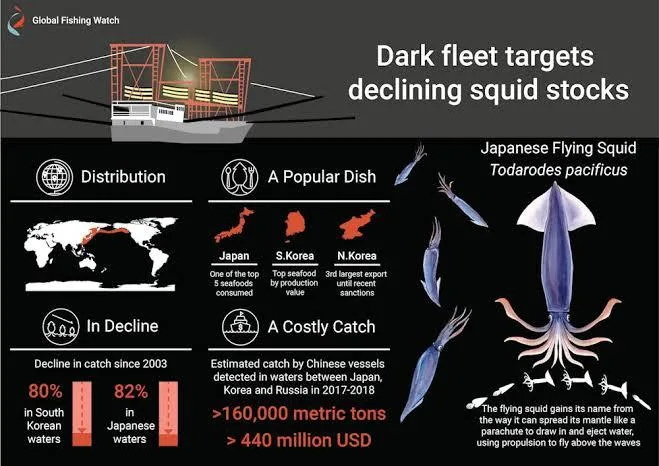
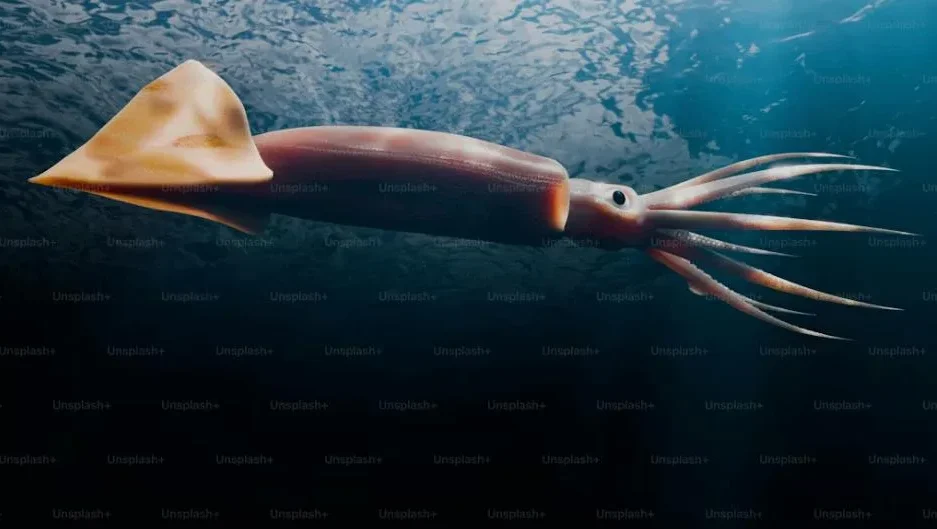
Unregulated industrial squid fishing in the northwest Indian Ocean has grown into a serious ecological and socio-economic crisis—and it is one we at Wild at Life e.V. have been documenting for years.

Every time we travel to Sri Lanka, we see it with our own eyes: vast fields of bright white-green lights stretching across the ocean at night. These lights come from hundreds of distant-water vessels, operating just outside the exclusive economic zones of countries such as India, Pakistan, Oman, and Yemen. While much of this activity exists in a legal grey area, the reality is clear—this fishery operates without effective oversight, allowing large-scale extraction to continue unchecked.

We have followed the rapid expansion of this fleet through satellite data and on-the-ground observations.
Satellite imagery has become one of the most powerful tools for exposing what is happening at sea. Since the launch of the NOAA–NASA Suomi NPP satellite, night-time light data has been freely available and is now widely used to track activity that would otherwise remain invisible. What we see from space confirms what we witness in the field.
In the northwest Indian Ocean, these vessels are clearly visible at night. Using high-intensity lights, squid fishing boats illuminate the ocean surface to attract their catch—often with dozens, sometimes hundreds, of lamps per vessel. From above, this creates dense clusters of bright points across the Arabian Sea, marking the exact locations of industrial fishing activity. From space, the scale is impossible to ignore—yet on the water, it remains largely unchecked.
When this data is combined with vessel tracking systems and fishing records, it reveals patterns of fishing that are not only largely unregulated, but also potentially unsustainable. According to the FAO, around 30% of assessed fish stocks in the Indian Ocean are already being fished beyond sustainable limits. What we are seeing in this fishery reflects that wider pressure—an industry expanding faster than it is being understood or managed.
In just a few years, vessel numbers have surged dramatically, and fishing seasons have extended further and further. At the same time, the methods used—powerful light attraction and increasingly non-selective gear—are placing immense pressure not only on squid populations, but on entire marine ecosystems. Species such as tuna, sharks, and whales are affected, and the balance of the ocean is being pushed to its limits.
But this is not just an environmental issue. We are seeing firsthand how coastal communities are being impacted. Local fishers are facing declining catches and growing economic pressure, while competing with industrial fleets they cannot match. This imbalance is deeply concerning, and it reinforces why this issue cannot be ignored.
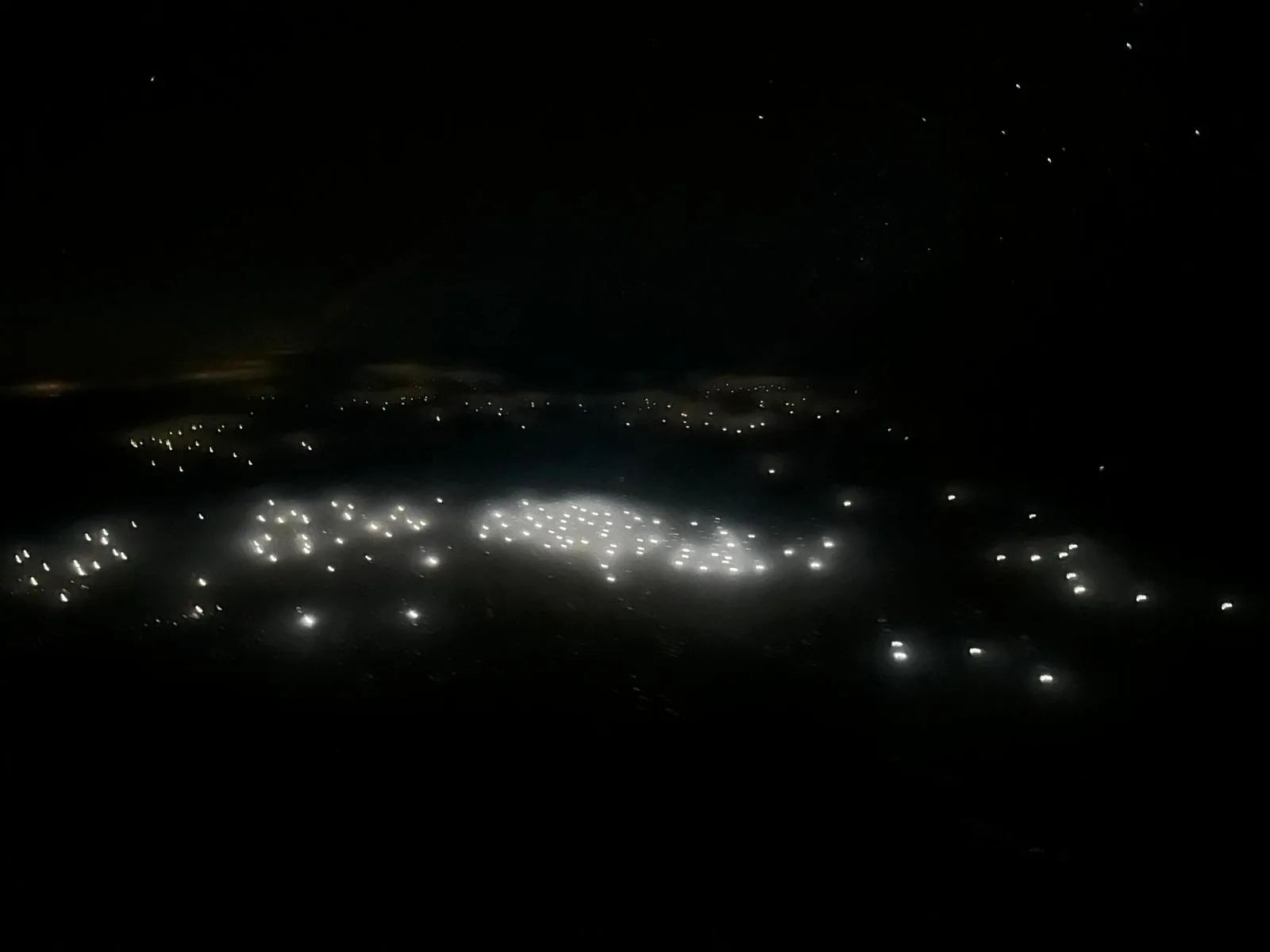
At Wild at Life e.V., we continue to actively monitor this fishery. Through our pilot volunteer network, we are still receiving visual documentation from the region, showing that these fleets remain present and active. This ongoing evidence is critical—it allows us to keep the issue visible and grounded in reality.
At the same time, we know that documentation alone is not enough. That is why we are strengthening our work through strategic partnerships. We are now working closely with a global legal partner to address the regulatory gaps that allow this fishery to persist, as well as with an international partner focused on stopping destructive fishing practices. Alongside these partners, we are increasingly joined by major international NGOs and engaged lawmakers, building a coalition that can push for real change.
Together, we are working to bring transparency to this largely hidden industry, to advocate for stronger governance, and to push for accountability at an international level. Our goal is clear: to stop the unchecked exploitation of marine resources and to protect both biodiversity and the communities that depend on it.
Despite growing awareness, this crisis is far from resolved. The scale of the problem—and the speed at which it continues to expand—make it clear that much more needs to be done.
And so we continue.
This work takes time, people, and resources. If you’re able to support us, it genuinely helps us keep going.
Help us increasing social commitment in saving endangered wild species. Express your support by sharing this article in your favorite social media channel.
Protecting rhinos requires constant monitoring, strong partnerships, and long-term commitment. Through our Rhinoceros Conservation and Rescue Project, Wild at Life e.V. works together with dedicated conservation partners on the ground in South Africa to protect endangered white rhinoceroses and their
In Turkey, stray animals face unimaginable hardships every day—from scavenging for food to suffering from illness and injury. Many are victims of abuse, neglect, and cruel practices such as poisoning and mutilation. Recent government legislation allowing mass euthanasia of stray
City pigeons live a life few people truly see. Constant noise, traffic, hunger, cold, and danger are part of their everyday reality. Injuries are common, safe nesting places are rare, and survival often depends on luck rather than care. Yet
Snares are one of the biggest threats facing wildlife across Africa.Silent, cheap, and almost invisible, these wire traps are responsible for the suffering and death of millions of animals every year. Made from wire or steel cable, snares are easy
Every year, we travel to Sri Lanka to care for animals who would otherwise have no help. Our work focuses on stray dogs and cats living on the beaches and in nearby areas we are responsible for. We provide regular
We work with a local Frankfurt-based wildlife charity called Projekt Oase – Mensch und Tier im Einklang e.V., which focuses on protecting and rescuing wild waterfowl and other birds along the Main River. Projekt Oase is a small but passionate